Shrubs
Conebushes are beautiful tropical flora that can be grown in containers or in your landscape . horticulture expert Kaleigh Brillon talks about how to develop and care for conebushes in this article .
Conebush is a financial statement slice in any garden that thread tending from humans and pollinators likewise . Some varieties grow tall and look like a tree rather than a shrub , while others bide on the smaller side .

While conebushes are native to tropical regions and lookright at home in a riotous , tropical garden , you’re able to spring up them almost anywhere . They can go now in the earth in affectionate climates . In northerly zones , they must be keep in containers and bring indoors once the temperature cool down .
Once a conebush is lay down , it ’s low upkeep and loose to give care for . You do n’t require to water it often , and it does n’t need fertiliser , so occasional pruning is all you require to worry about . Let ’s speak abouthow to plant , grow , and care for the conebushso you may tot up one of these adorable plants to your collection .
Contents

Conebush Plant Overview
About
Conebushes are native to South Africa , but have since circulate worldwide , growing alfresco in regions with modest winter . The conebush is from theproteaceaeplant family and is tight related to Protea , or the sugarbush .
The genusLeucadendrondoesn’t quite tally the works ’s description , draw it a misleading name . The Hellenic wordLeukosmeans white-hot , anddendronmeans tree diagram .
If you guessed this plant ’s appearance on etymology alone , you ’d think it ’s a white Sir Herbert Beerbohm Tree ! However , it ’s anevergreen shrubthat boasts shiny and beautiful reds , oranges , and pinks throughout the twelvemonth .

Cultivation
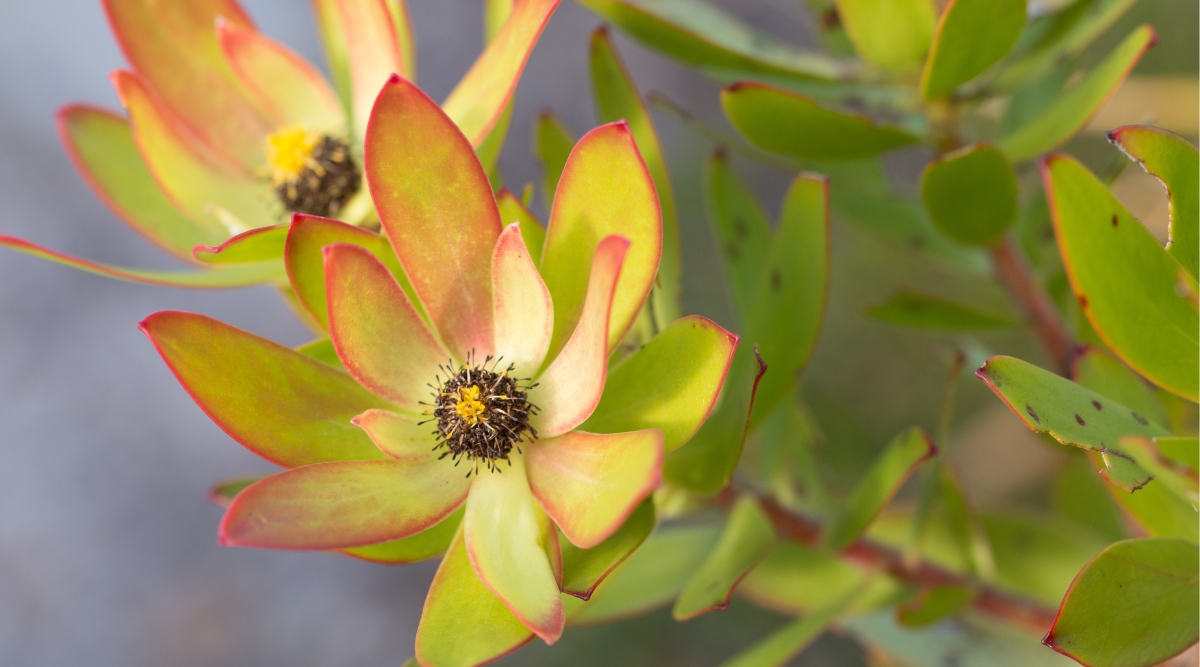
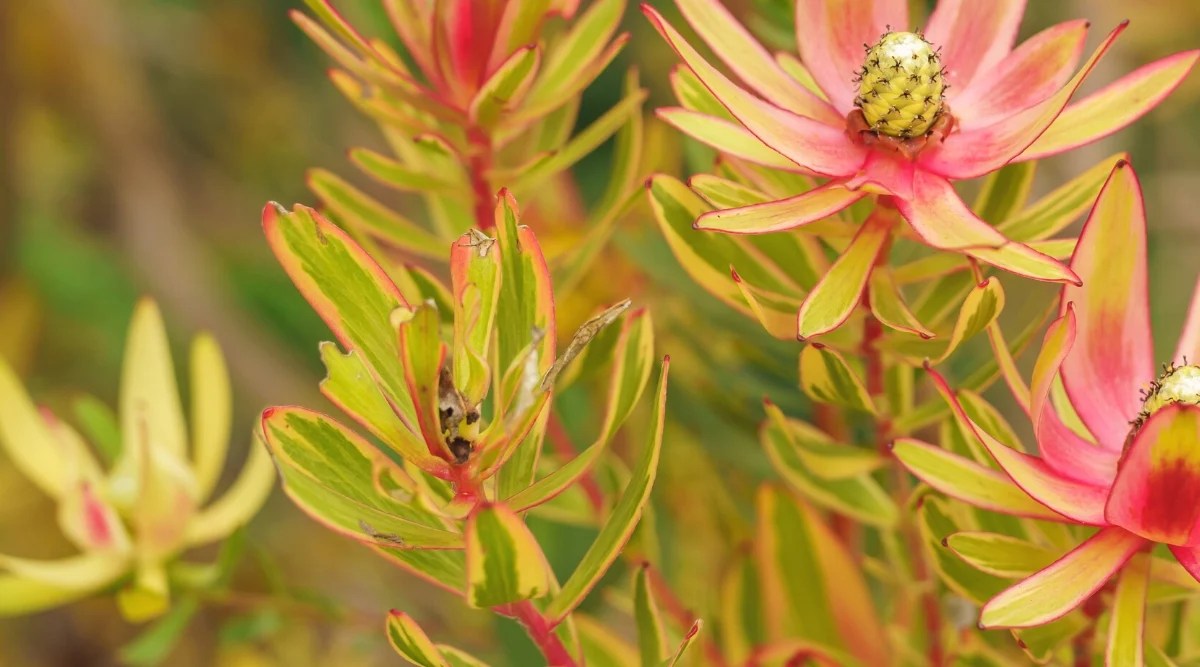
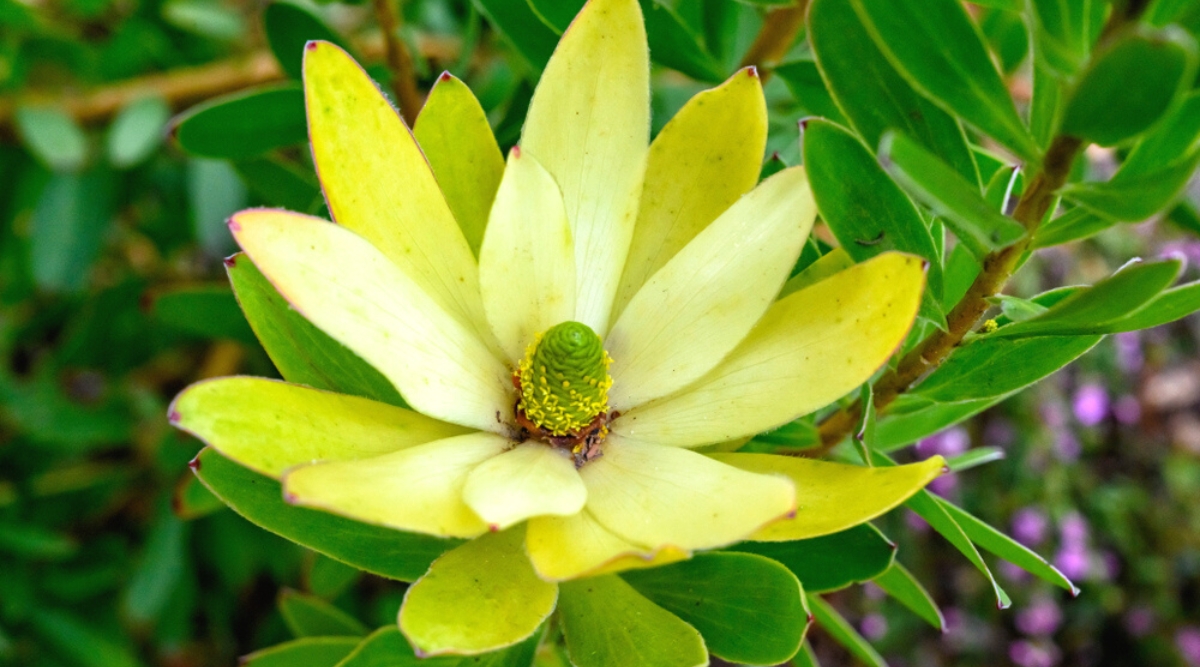
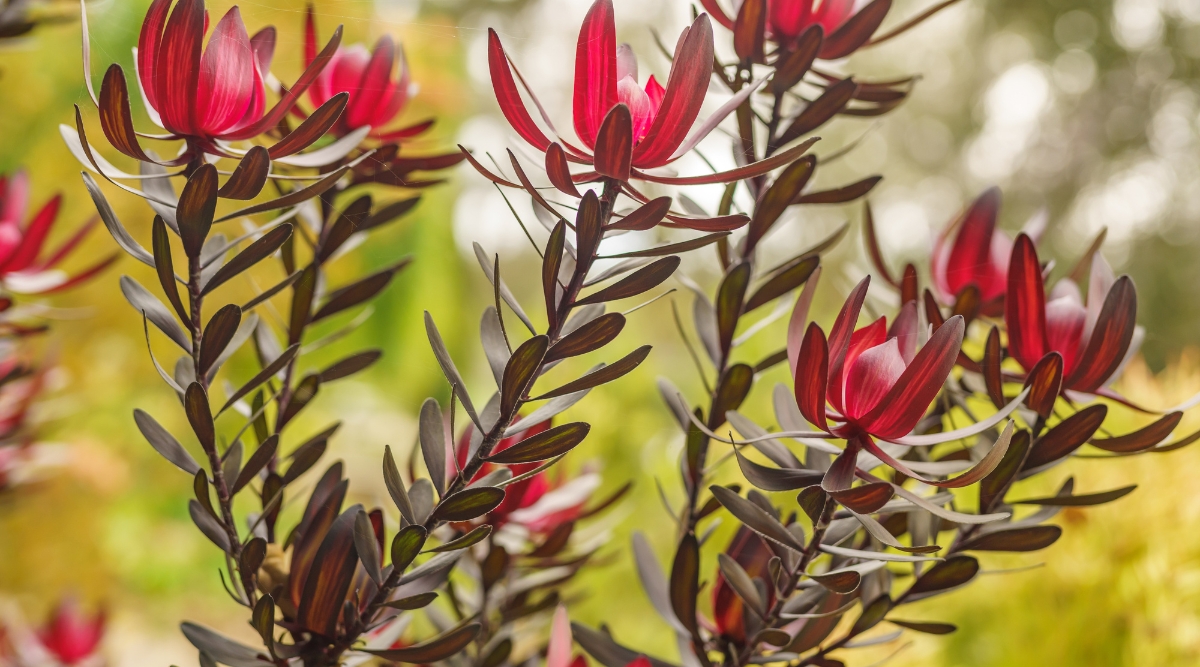
Conebushes have good stems with bright flower on the ends . The ends of the stem have inflorescences , which are groups of flyspeck peak . They ’re surrounded by bract that look a lot like petal to create what look like giant flowers .
There are over80 varieties of Leucadendron , and they vary significanty in sizing and colour . The flowers can be imperial , red , pink , orangish , white-livered , or white , with many mixed bag sporting several colors at the same time .
Some metal money lay low , reach only 4 human foot , while others tower up to 30 feet grandiloquent . The size of your conebush will depend on the variety , climate , and location . If you have to grow yours in a container due to stale winters , it will outride much small than the same mintage growing outside in southern Florida .

Propagation
The two main ways to spread conebushes are by stalk cuttings and seeds . Using a loose growing mass medium to start your unexampled plants is important because they detest having wet feet .
They wo n’t survive if the mass medium retains moisture for too long , developing slushy roots and fungal disease . manage for persnickety starts might seem hard initially , but once you know what makes them well-chosen , you ’ll see it ’s not so bad .
Stem Cutting
stalk cutting are the gentle way to obtain a new conebush . You ’ll need a flexible semi - ripe stem cut from the new maturation toward the end of the growing time of year . secure the stem is several inches long , and take the leaves from the bottom half .
Dip the bottom of the reduce intorooting internal secretion , thentransfer the plant to a small potty filled with vermiculite , allow water supply to run out easy . check the batch has drainage holes so excess body of water wo n’t build up .
Place the Mary Jane on a heated get flatness to keep the soil warm but not hot . Heat and humidity are crucial for incur theme to develop . Mist the stem with water daily , or tie a plastic travelling bag around the plant and sight to keep the breeze humid .

Once the plant has new outgrowth , it should have ahealthy root system , and you could remove the bag from the pot . you’re able to allow the industrial plant to keep growing in this pot or transfer it to a turgid toilet . Harden off the plant before moving it outside since it ’s still unseasoned and tender at this phase of development .
Seed
Conebushes have male and distaff cones . cum are harvested from distaff cones , and their size can vary between mintage . When you harvest the cones , send them in a wry domain toallow them to dry out whole . If the cone does n’t open independently , you could cautiously break it undefendable .
Fill a sturdy green goddess or traywith moist but well - draining seed starting mixture . The seed wo n’t survive in a soggy environment , so the growing medium musn’t hold any excess moisture .
Place small seeds on top of the come starting commixture and part wrap up the larger germ . Place the container in a sunny arena , butavoid verbatim sunshine . Cover the seeds with a plastic lid or bag to keep proper humidity .

If necessary , practice a heated mat to keep the soil ardent . seeded player will shoot the good when nighttime temperatures are 68 - 72 ° F , with daytime temperatures reach up to 83 ° F . If the room your seeds are in ca n’t stay at these temperatures , a heated Master of Arts in Teaching will avail .
Once the seed burgeon forth and develop root system , you canmove them into large weed . As I name with stem cutting , moving them outdoors too soon could result in them not pull round .
Have patience with immature plants ; it will be about three year before you see them develop bloom .

Planting
The honorable time to constitute conebushes in the ground is in autumn or after the final hoar in spring . opt a location that receives as much lineal sun as potential . Do n’t clean a location that receives less than six hour because it wo n’t be enough sunshine to keep the industrial plant happy .
Good drain is necessary to grow a conebush successfully . Amend large clay grunge withsand or perlite , and count plant the conebush on a mound so excess water wo n’t puddle around the root .
Once you have chosen the right location , toil a hole doubly as mysterious and wide as the origin ball . If you bribe a plant from the nursery , utilize the entire glasshouse pot for size . The enceinte hole will give the attender roots spate of aerated soil to spread through , make it easier for the industrial plant to get established in its new locating .
After removing the grime , mix it with compost . If you need to amend the soil , now is the time . Add the soil back to the hole , only fulfill it about midway .
Place the industrial plant in the hole and check that the top of the ancestor egg lines up with the top of the pickle unless you require to make a mound . For a mound , you could go out the top of the root ballock high than the dirt furrow , but you ’ll need extra grease to build up around it .
Once the plant is in the partially filled mess , continue backfilling it . Pack it down enough to dispatch atmosphere pockets but not so much that you pack together the grunge . Water the plant and add more soil if necessary .

Container Planting
Container planting use a process similar to planting in the ground , but there are a few things to recollect . Most importantly , see the container has drain hole so supererogatory H2O wo n’t stay in the ground . Use a pot bigger than the nursery flowerpot your industrial plant was previously in so it will have room to arise without the immediate need to re - pot it .
A green goddess with raw grease permit you to get exactly what you need- no pauperism to meliorate in - ground soil ! Like in - ground planting , partially fill until the top of the root musket ball lines up with the boundary of the Mary Jane . You do n’t need to worry about mounding here since the kitty will have drain holes and well - enfeeble stain .
Place the industrial plant in the pot and make full it with more soil . backpack it down butdon’t compact the grunge , then water it . Add more grunge if necessary to level it out .

Keep your pot in a sunny localization . you’re able to keep it outside during the quick months in most areas , but you ’ll need to bring it indoors when the weather cools down . Keep it in a sun lounge or greenhouse to keep ideal conditions year - round .
How to Grow
Conebushes may seem super picky ab initio , but they ’re easy to deal for once you get into the flow . They can even be alow - maintenance shrub , provide you have the right growing circumstance . Let ’s look at how to make this flora flourish .
Light
Conebushes will thrive when given as much direct sun as possible . maturate them in a emplacement not shaded by social organisation , fence , or other plants . seek to getat least six hours of lineal light , but the more , the merrier !
They can acquire in fond tint , but their colors wo n’t be as vivacious . If you ca n’t get your plant the light it needs in one spot , keep it in a pot so you’re able to move it around as want to try out different position .
If you keep your conebush indoors through winter , grow it next to a window in a bright room . Since winter is its dormant time of year , the want of luminosity wo n’t bother it .

Water
Conebushes are ideal for ironical expanse prostrate to drouth because they do n’t involve much water once they ’ve suppurate and set down their deep tooth root . Newly planted cum and stem turn carving take a lot of humidity when first starting , but established plant only need to be watered when the dirt is juiceless .
The right mode to urine is at the base of the plant life . Avoid getting the leaves wetif you’re able to . If that ’s not an alternative , water in the break of the day so the plant can have the whole twenty-four hour period to dry out .
Water lento and deeply . Let water trickle from the hose until several in of territory are sloshed . Ensure the soil drains well so it does n’t stay wet for too long . lactating base will kill conebushes in a matter of Clarence Shepard Day Jr. , which is why drain is such an authoritative gene .
Allow the soil to dry out out completely between waterings . conventional bush are forgive of drouth condition so that they can handle wry soil for a myopic time .
Soil
Light , flaxen ground is idealistic because it admit water to drain well . Loamy grease will also work , but make certain it ’s on the sandy side andamend it with compost or perliteto keep it aerated .
If youuse clay soil , it will necessitate to be hard amended since Lucius Clay retain a sight of body of water for a long time . Clay soil will be better suited for container since they have drain holes . The soil you apply should be more or less acidic with apH of 6.0 or less , though conebushes can tolerate a neutral pH.
Top the ground with mulch to reduce weed . Do n’t allow the mulch touch on the base of the shrub , and make indisputable it ’s not too fatheaded . Retaining moisture is n’t bad , but keep the dirt too loaded can harm the flora .

Climate and Temperature
Conebushes grow in effect in USDA hardinesszones 9 - 11 . It likes strong weather without freezing temperatures , though some varieties can withstand unforesightful periods reaching down 20 ° F .
However , this will still cause some damage . ensure you sleep together which variety you have and the lowest temperatures it can withstand so you may prevent hurt your industrial plant .
If you live in zone moth-eaten than 9 , you could keep your plant in a container to winter it indoors . you could also grow it indoors as a houseplant , though it will be much smaller than if you were to develop it outdoors .

Fertilizer
You likely wo n’t want to fertilise your conebush since it ’s a clear feeder and does n’t demand many nutrient . start up your plant with a generous amount of compost ; it should have enough nutrients for the rest of the year . Add more compost each springto give a boost .
If your plant wait stunt , you’re able to give it some fertilizer for shrubs . Look for something with petty or no phosphorus , such as an NPK of 15 - 0 - 15 .
Maintenance
A little pruning lead a long means . These are forgive plant that can handle a lot of pruning , but you need to know which stems to cut and which to head off .
rosiness seem on unexampled growth , so never crop the plant down to leafless , woody stems . However , clip off spent bloomsduring the growing season to promote more blooms . When it stops flowering at the destruction of the growing season , heavily prune it to encourage bushier outgrowth next year .
When you prune , leave behind some recent growth to have bloom in the next season . Pruning down to the woody parts is an alternative if your industrial plant has become leggy and you want to “ come out over , ” but you ’ll in all probability not see any blooms next yr . But it should be much bushier by the time it does bloom again .

Varieties
Here are some popular and notable varieties to insure out :
Pests
Conebushes are loosely pest - devoid , but they are n’t resistant to problems . Though you may only deal with some of these issues , these are rough-cut possibilities .
Beetles
A couple of dissimilar kinds of beetles can attack conebushes . Flea beetleshide out in foliage litter or tall , grassy area in the wintertime . They lie in ballock in the spring , which hatch into hungry larvae that eat plant roots . full-grown beetles eat leaves and create several flyspeck holes .
Largeflea mallet infestationscan badly damage a industrial plant . Prevent them by rake up fall leaves and only using thin layers of mulch . Pay close care to new conebush seedling since flea beetle favour them .
Kaolin clay can prevent adults from munch on leaves , and lacewings are natural predators . Get ahead of the problem by attracting theseand other good predatorsto your garden .

Another beetle pest is fore borers , the larvae ofslender - incarnate mallet . The adult lie orchis by stems or under the barque . When the eggs dream up , the larva wipe out their way into shrubs and eat the stems from the interior out for three years , taking a break each winter .
insect powder are n’t recommended for stem rock drill since they ’re inside the plant . or else , dispatch infected branch to reduce the population , and look out for egg piles to prevent the next propagation .
Termites
termite like moist precondition and woody plants . The colonies initiate in moist soil and eat up their way of life into shrubs . The best way to forbid them is to keep your conebush pruned toremove beat woody stem .
Apply beneficial nematodes to the soilto kill the dependency , or you may practice termite bait . Remove and interchange the dirt for container flora , and ascertain it does n’t stay moist for too long .
Thrips
Thrips are petite flying insectsthat suck sap out of works . They most likely wo n’t kill conebushes , but they will make discoloration and make your plant less than somewhat if it ’s a large infestation .
as luck would have it , many predators will help you take care of thripid , include mites , parasitical wasps , and lacewing . obviate using insecticidesthat will harm these beneficial insects . you’re able to also keep thrips at bay by regularly prune or using insecticidal soap .
Mites
Though there are beneficial predatory mites , some types , such asspider mites , will harm your plants . They suck up sap and cause discolouration , eventually leading todried - up leaves that fall off the industrial plant . Mites often appear on stressed industrial plant , so make indisputable to irrigate your conebush appropriately and that it get enough sunlight .
Predatory pinch can go after wanderer mite , thrips , some fly , and lacewings . move out excessive junk from pathways , as this can attract bad mites . you’re able to rinse pinch off with water , but do this in the morning so your conebush can dry out before nighttime .
Use insecticidal grievous bodily harm or neem vegetable oil , but avert chemical substance insecticides as much as potential . They often kill mite predator , leave you with a bigger mite problem than before .

Parrots
You probably are n’t die to deal with parrot in most of the U.S. ( except perhaps the Los Angeles orbit , which has a unfounded parrot universe ) , but they can be a notable plague in areas where they ’re native !
They like to eat the seeds , which can damage the plant . Remove spent flowers quicklyto prevent the cones from drying on the plant life , which will be enough to keep them off your bush .
Diseases
You wo n’t deal with disease too often , but if they ’re near other diseased flora , they might also come down with an sickness . Here are the most common diseases you might see in these bush .
Root Rot
Root guff is the most potential problem , but it ’s easy preventable . you could even annul the damage . Wet soil weather cause fungous evolution ; the fungus will attack the plants , causing the roots to rot and eventually kill the works .
you could keep this by making sure in - ground plants have well - draining soil . institute them on a slope willstop weewee from pool by the root . verify container plants have wad of drain holes along with sandy stain .
Tell - tale signs of root rot are yellowing leaves , scrawny outgrowth , and kitschy stems . If your plant has solution hogwash , excavate it up , dispatch the soil from the roots , and trim any rotted base . imbed it in a new area or container with ideal land conditions and drainage . Only water the plant life when the soil is dry .

Leaf Spot
Leaf spotting is make by various fungi that can scatter between plants . One of the most common is Colletotrichum gloeosporioides , which causesAnthracnose leaf spot . This appears as reddish - brown spot on farewell and inhibits a plant ’s ability to photosynthesize . The plant will only die if most leaves are affected and fall off .
Fungal disease often ca n’t be fully controlled once a plant life is infected , so the best method is prevention . Avoid getting foliage tight when watering , and do n’t let plants touch each other . In the cold months , rake up and remove fallen leaves so subsist disease wo n’t spread to new maturation when the conditions warms up .
bull antifungal agent can be applied in former spring before disease infect the plant . antimycotic can only preclude diseases , so they wo n’t be very effective on already - infect plant . However , you’re able to remove infected portions of the plant life and spray the salubrious parts with fungicide to slow or stop the disease ’s paste .

Grey Mold
Grey mold , or Botrytis , is another fungal diseasethat will go after feeble plant . If your conebush stand damage from weather condition or pruning , the open spots could become infected . Grey molding start as a white or grizzly fungus at the damage internet site and can spread to goodly parts of the industrial plant if it ’s not look at with before long enough .
take all septic part of the plantas soon as possible , making as few Modern injury as potential . As with foliage spot diseases , gray mold can only be keep and not treat . The disease thrives in moist , humid conditions , so allow your conebush to dry out altogether to prevent the spreadhead .
Final Thoughts
Conebushes are gorgeous plant life whether you grow them indoors or outdoors . They ’ll need extra care if grown in cool mood , but they ’re ultimately aneasy small maintenance optionthat typically wo n’t have pest or disease issues . With so many conebush varieties available , you may need help resolve which ones to prefer !